No products in the cart.


Curated by Sarah Celentano and Olena Speranska
Sept 5-13, 2026
Most Holy Trinity–St. Mary’s Church138
Montrose Ave, Brooklyn, NY 11206
BROOKLYN, NY — For the 25th anniversary of September 11th, Most Holy Trinity–St. Mary's Church presents Countenance: The 9/11 Missing Posters, an exhibition of photographs by artist Phil Buehler, on public view for the first time.
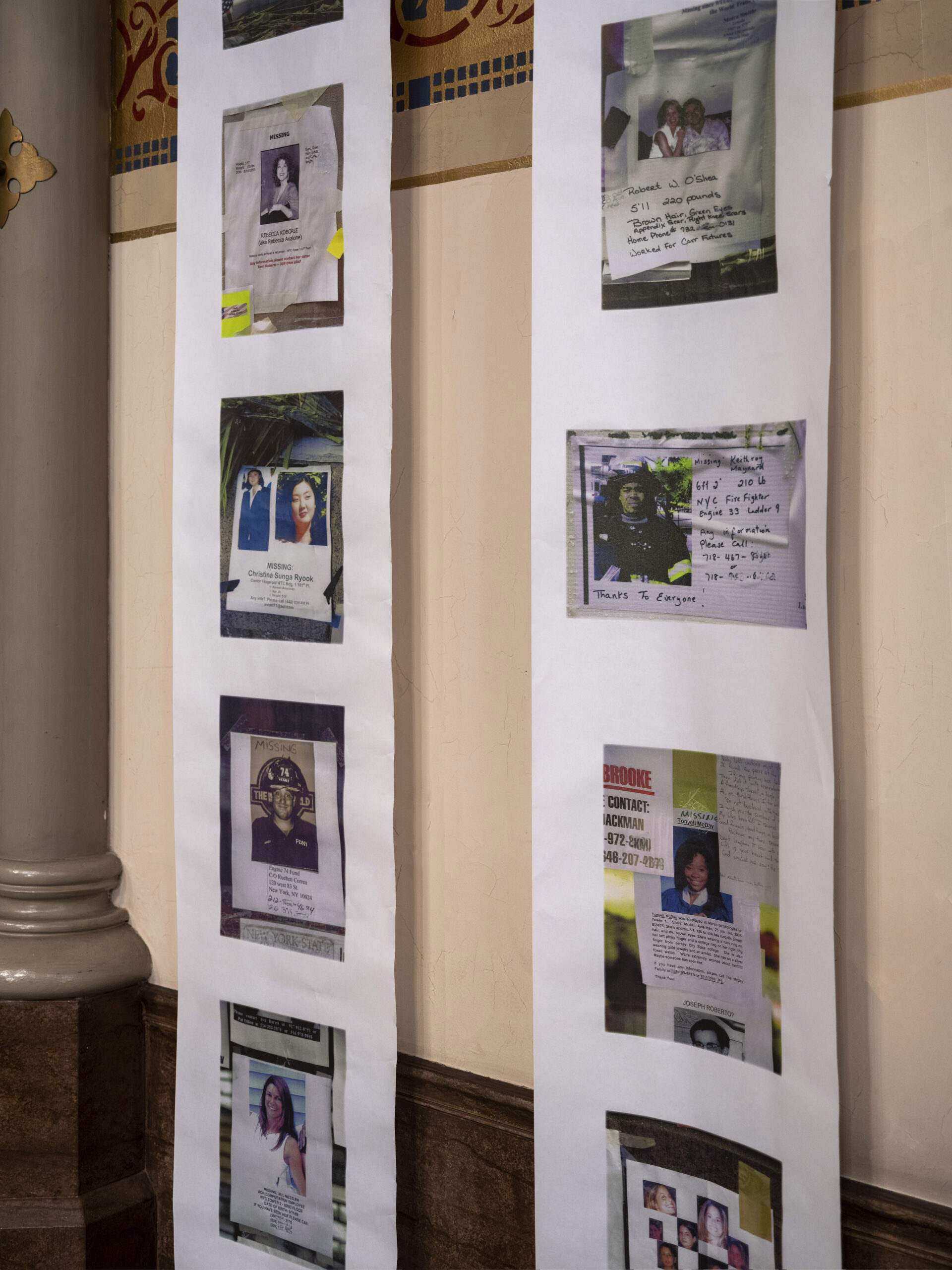
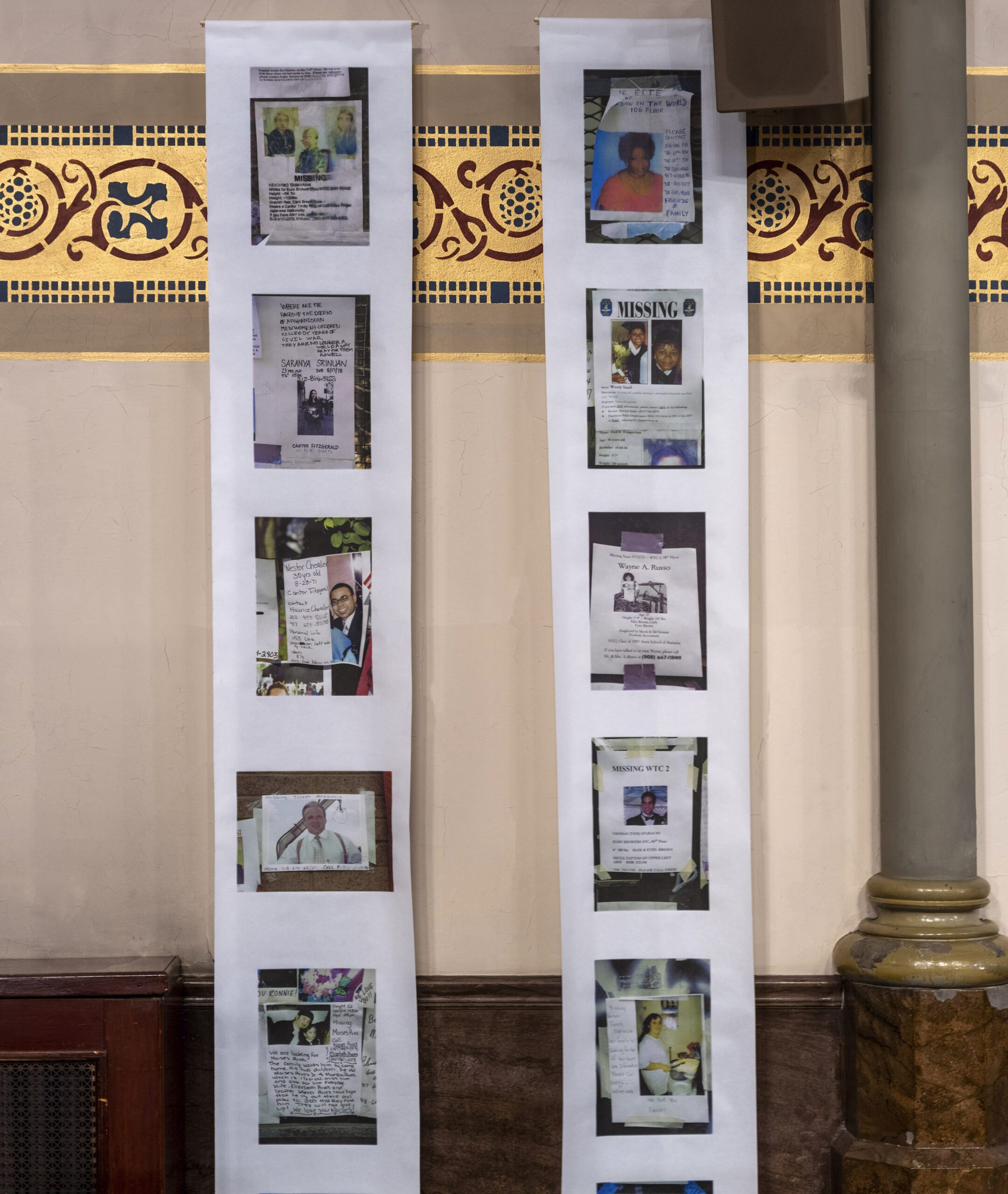
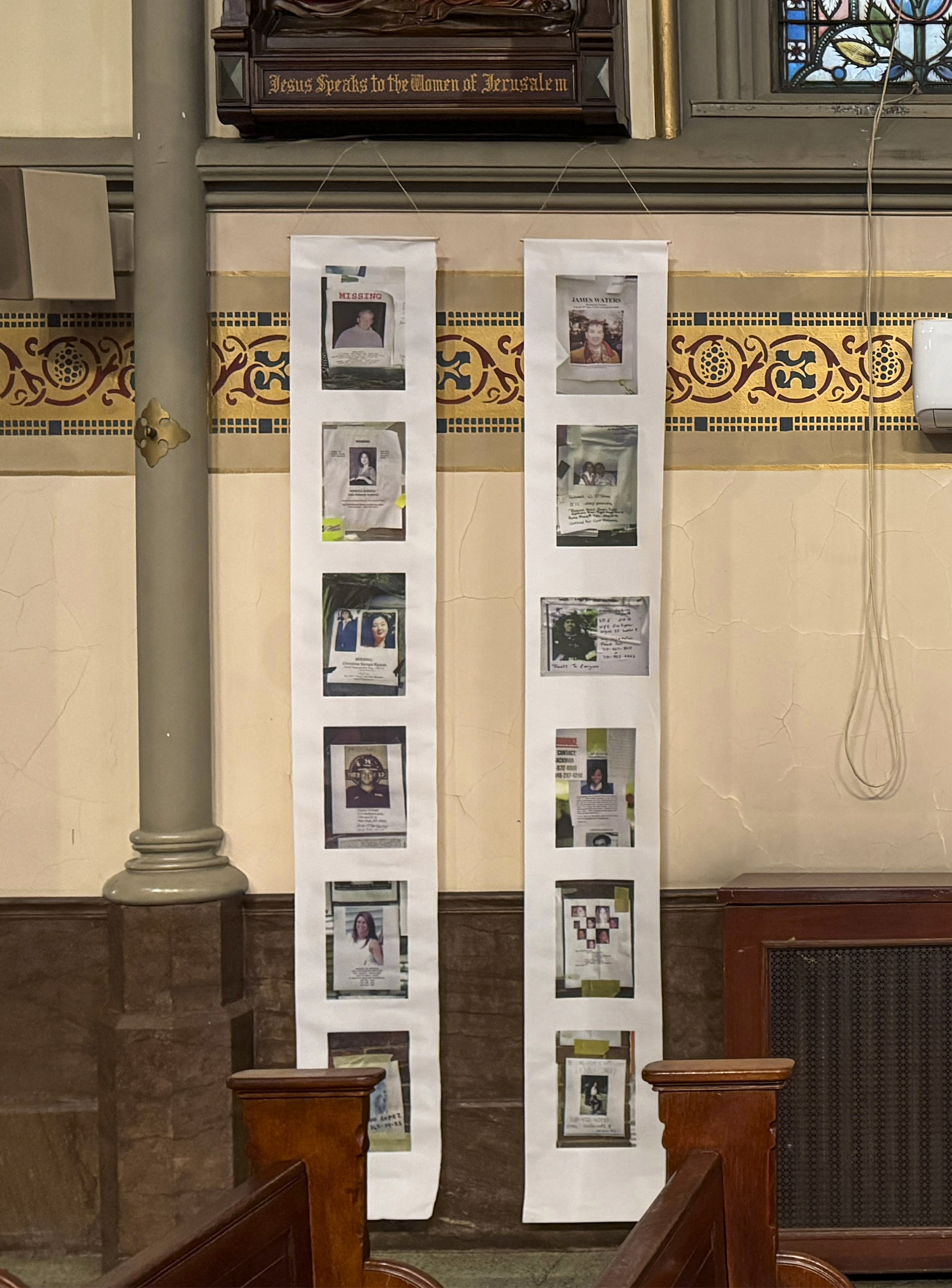
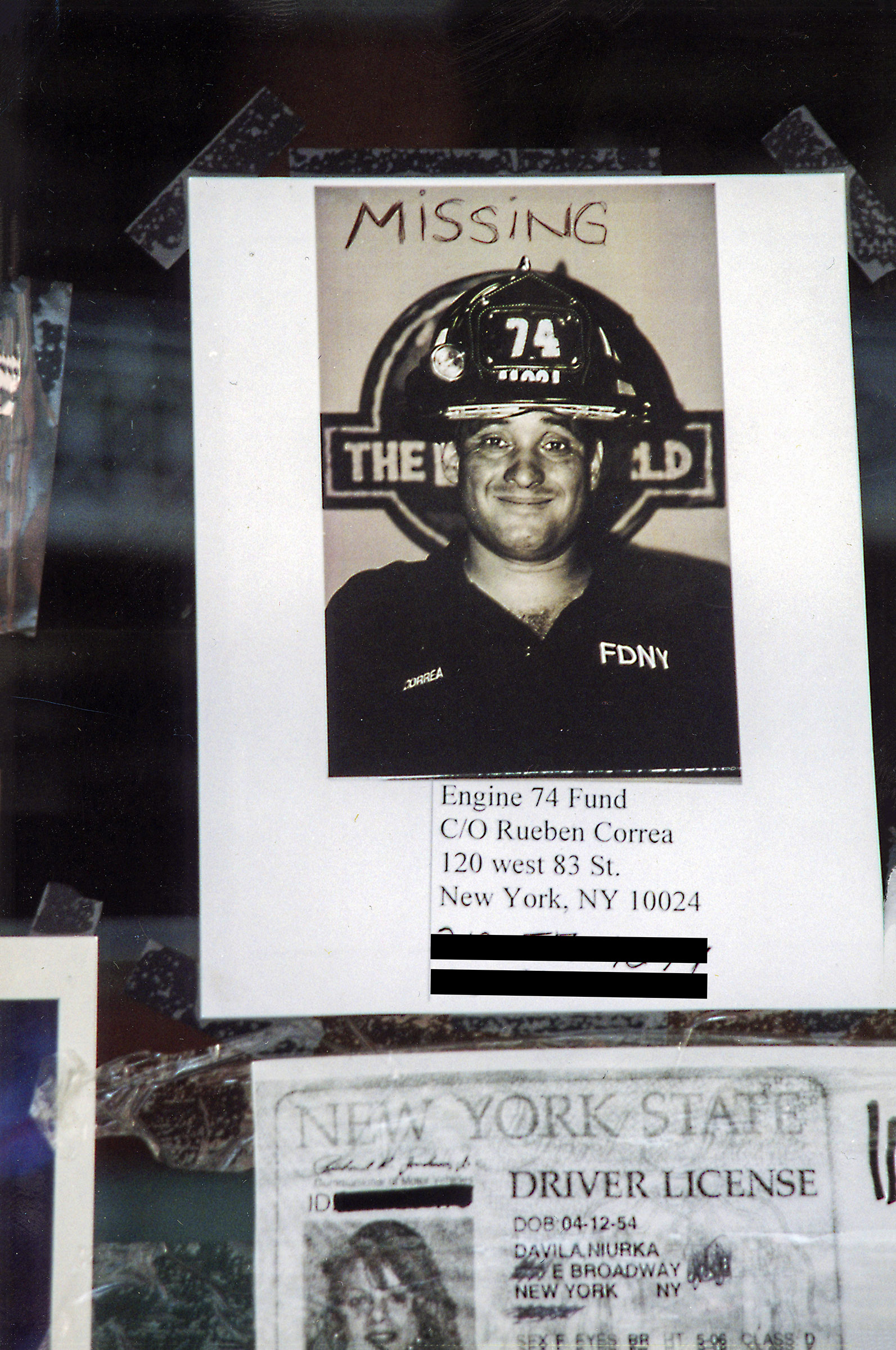
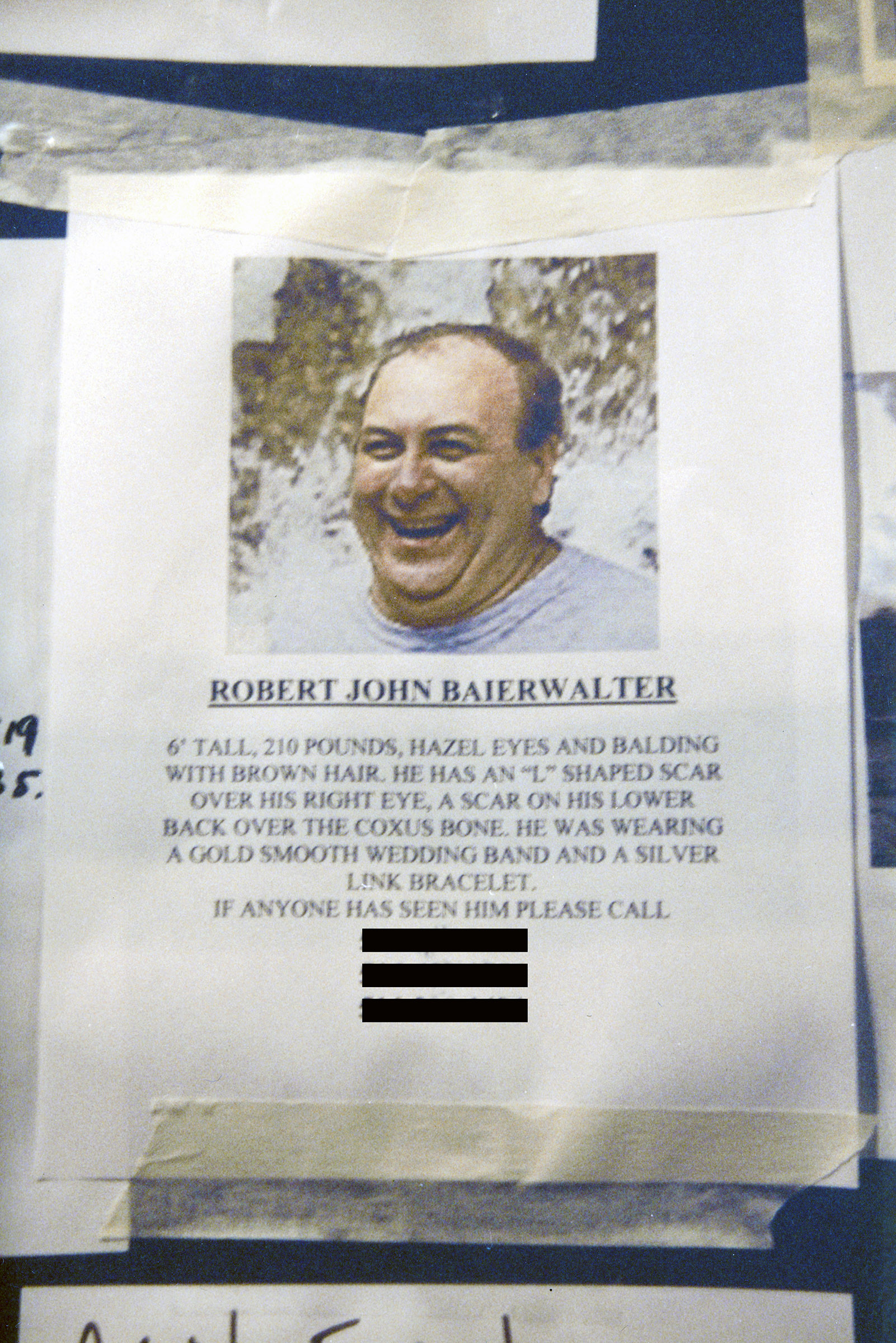
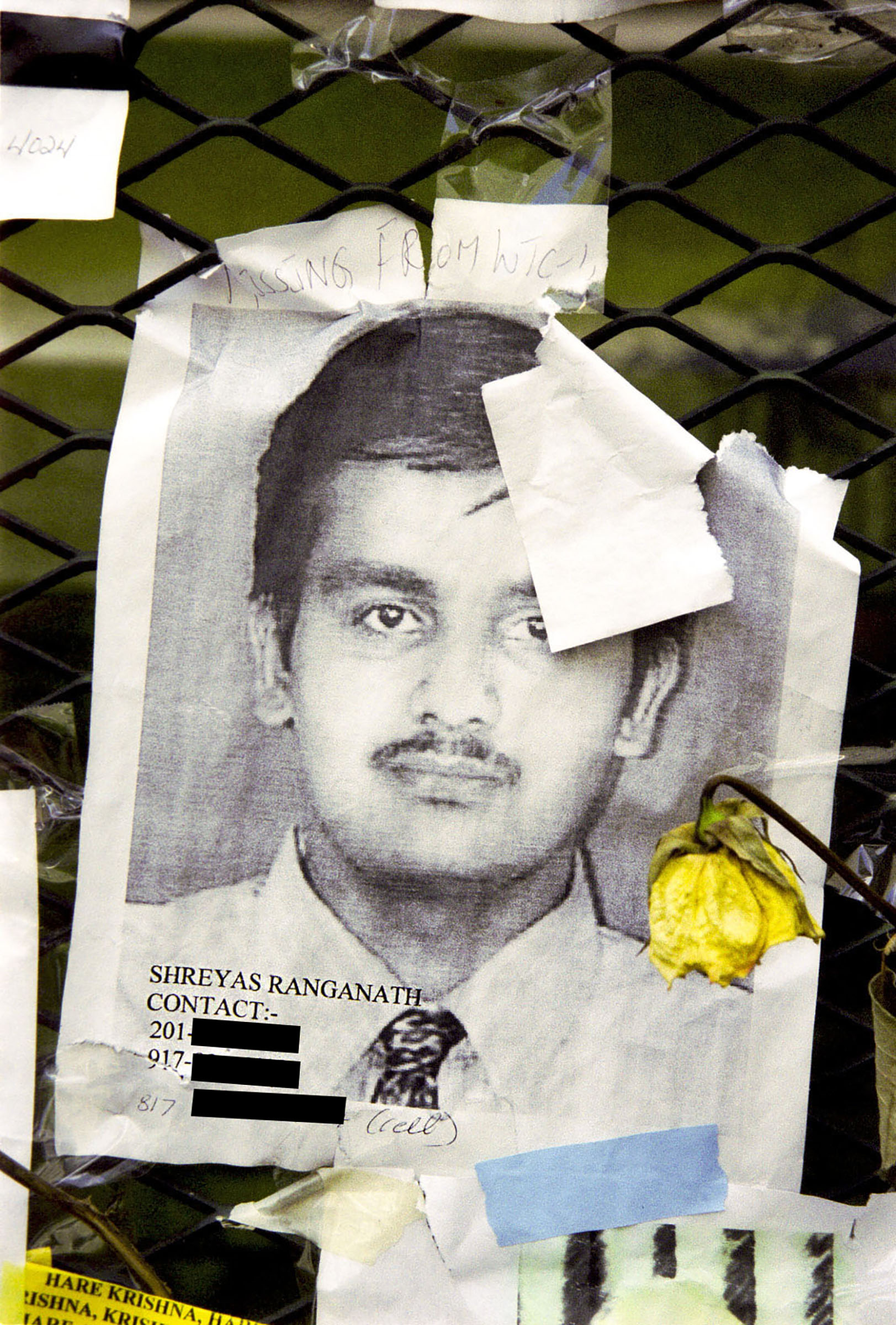
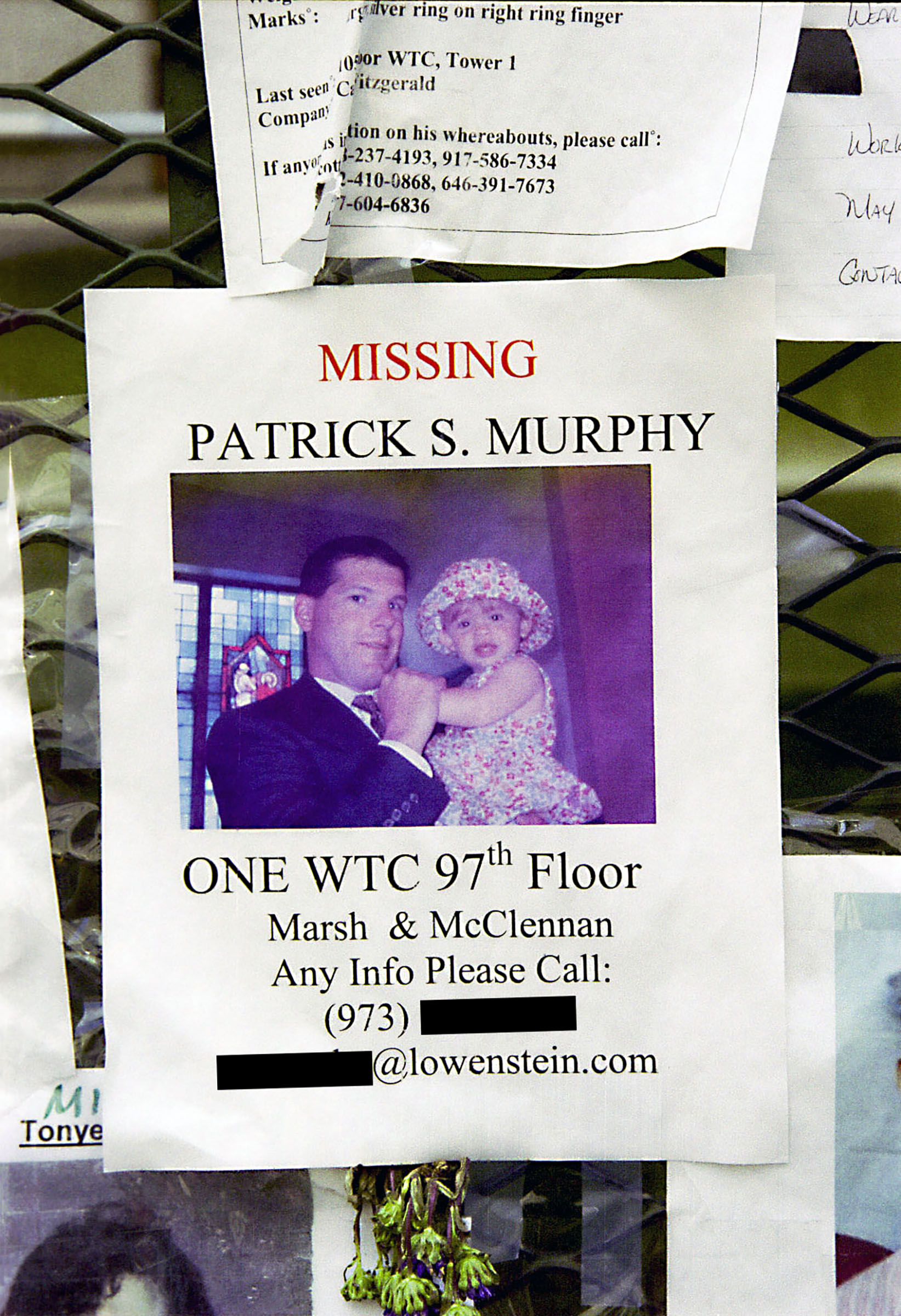
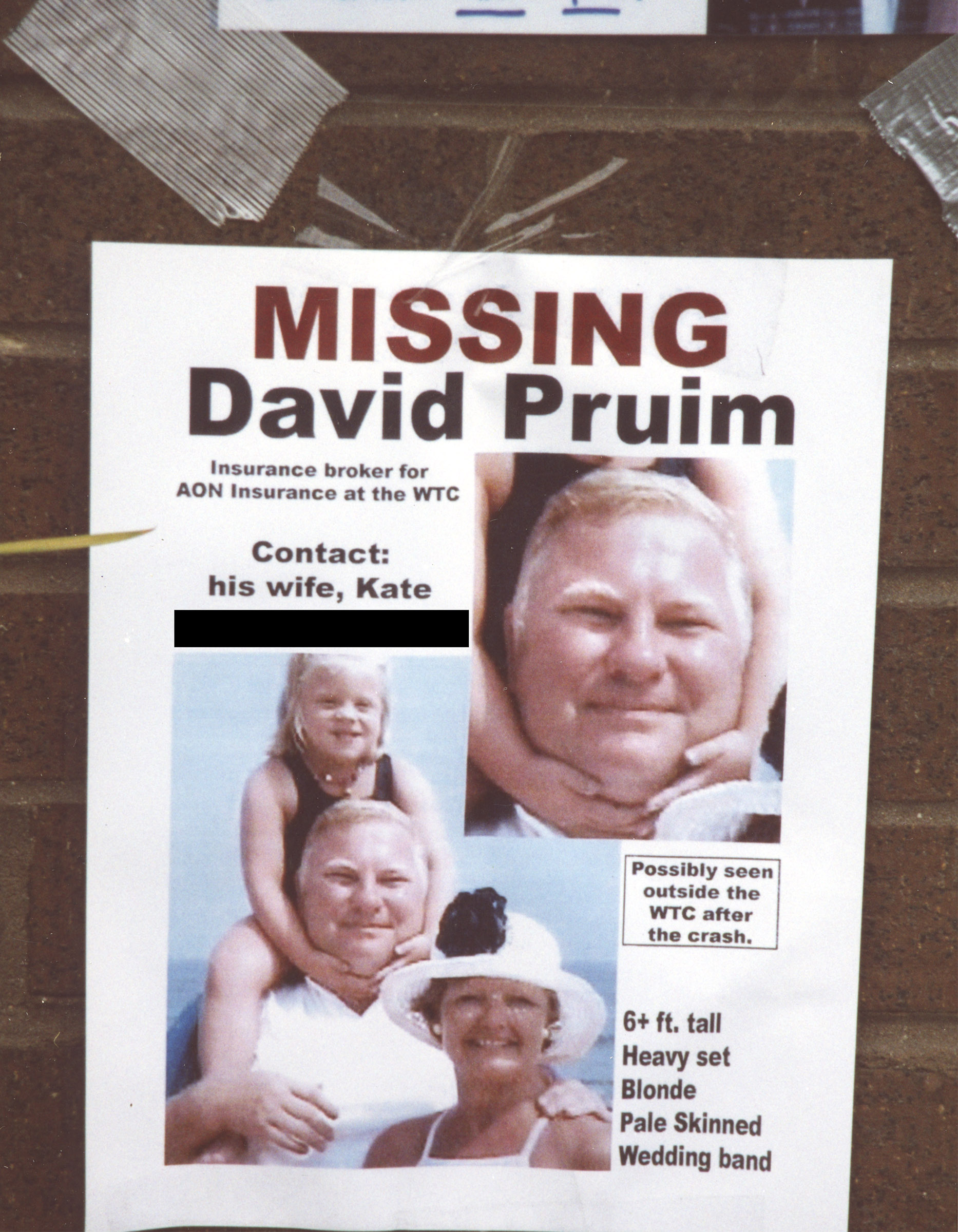
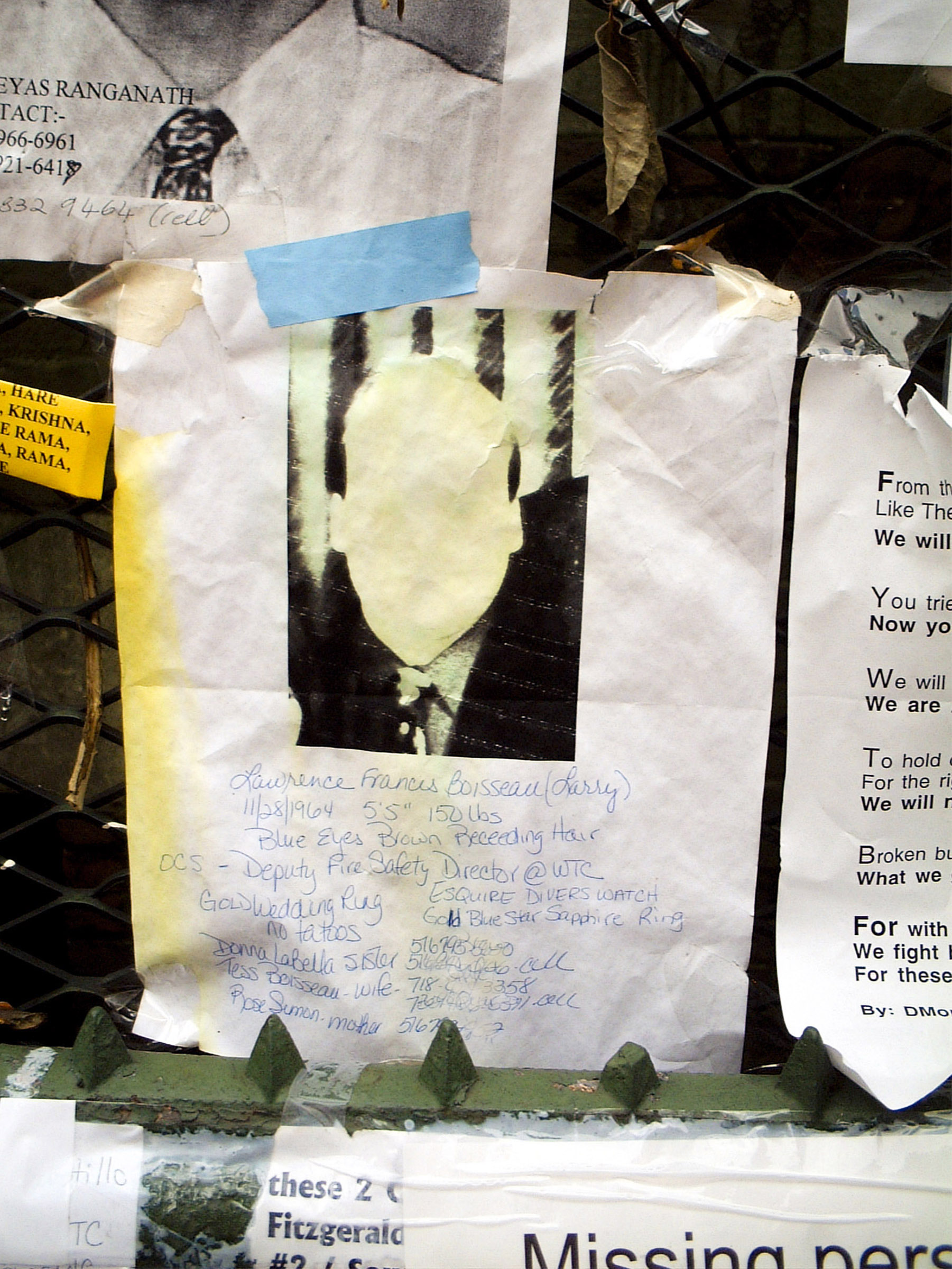
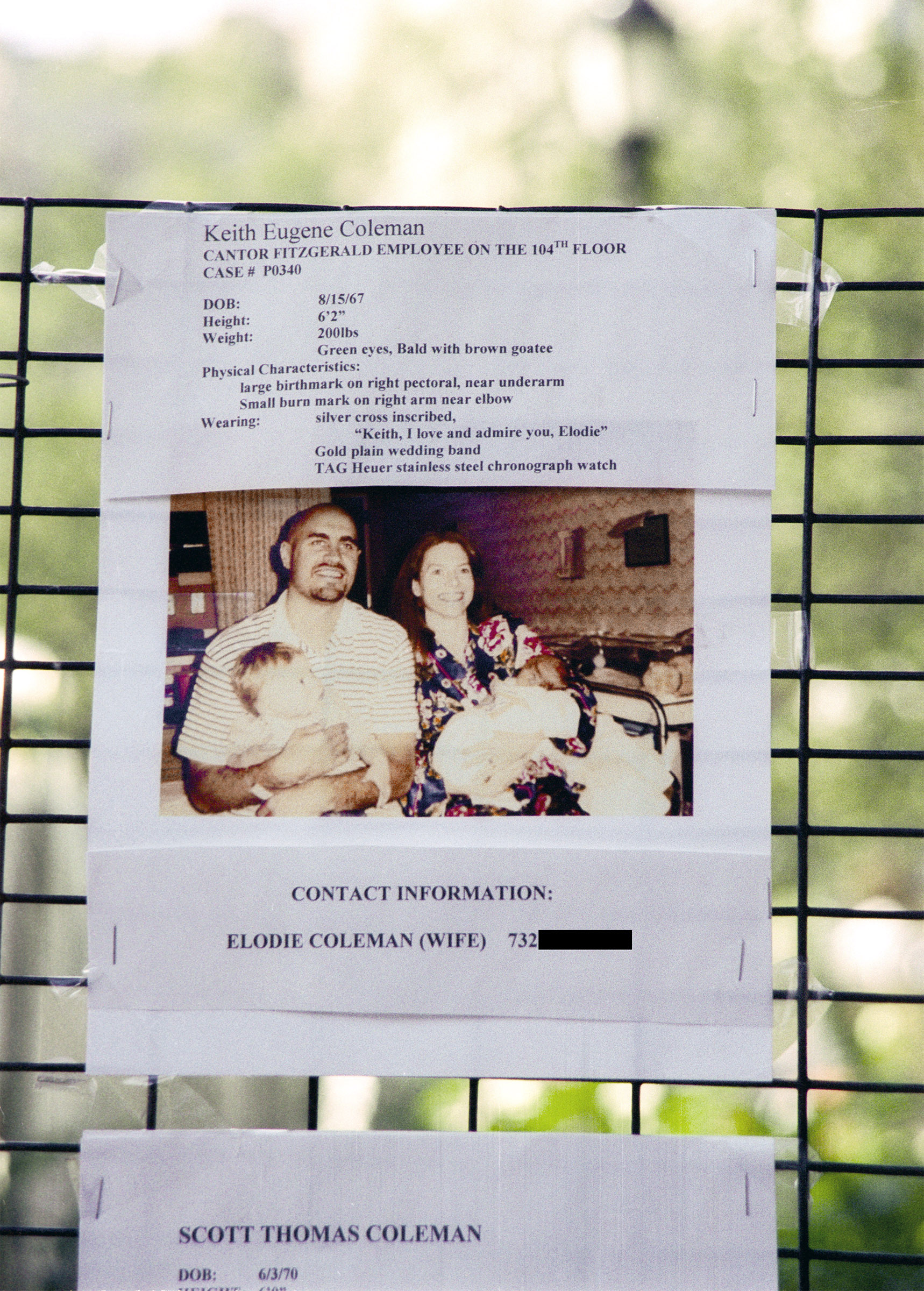
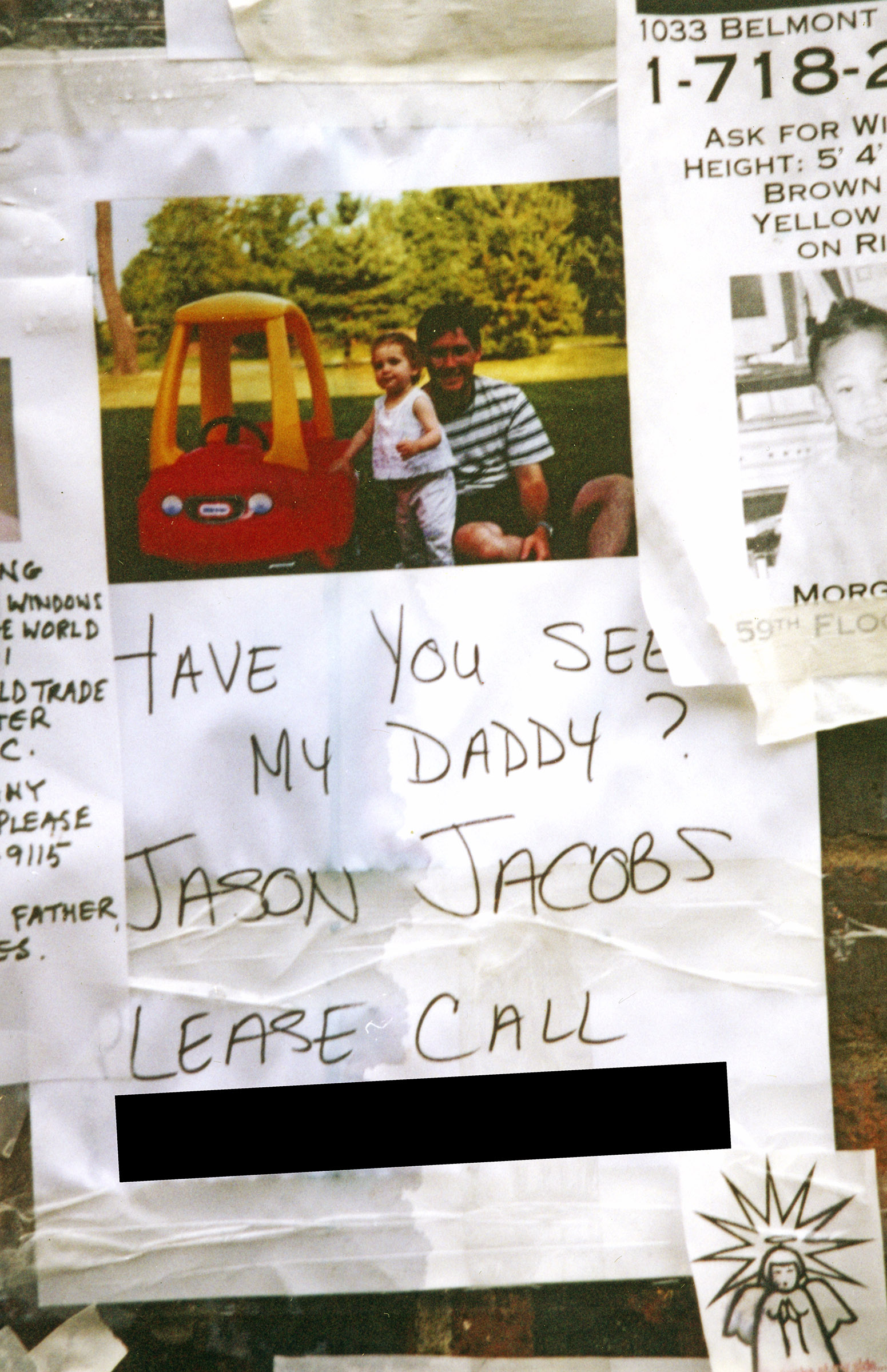
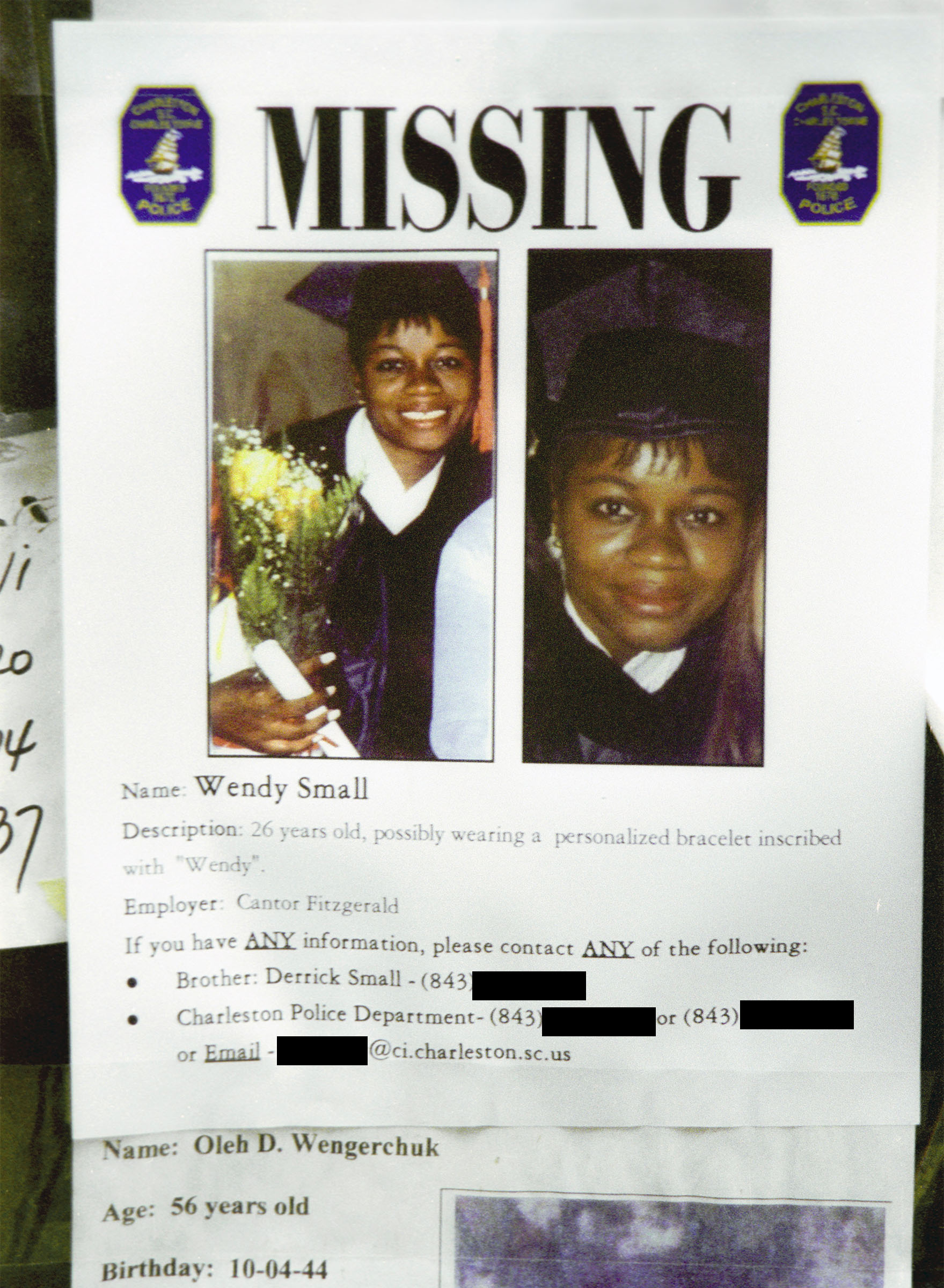
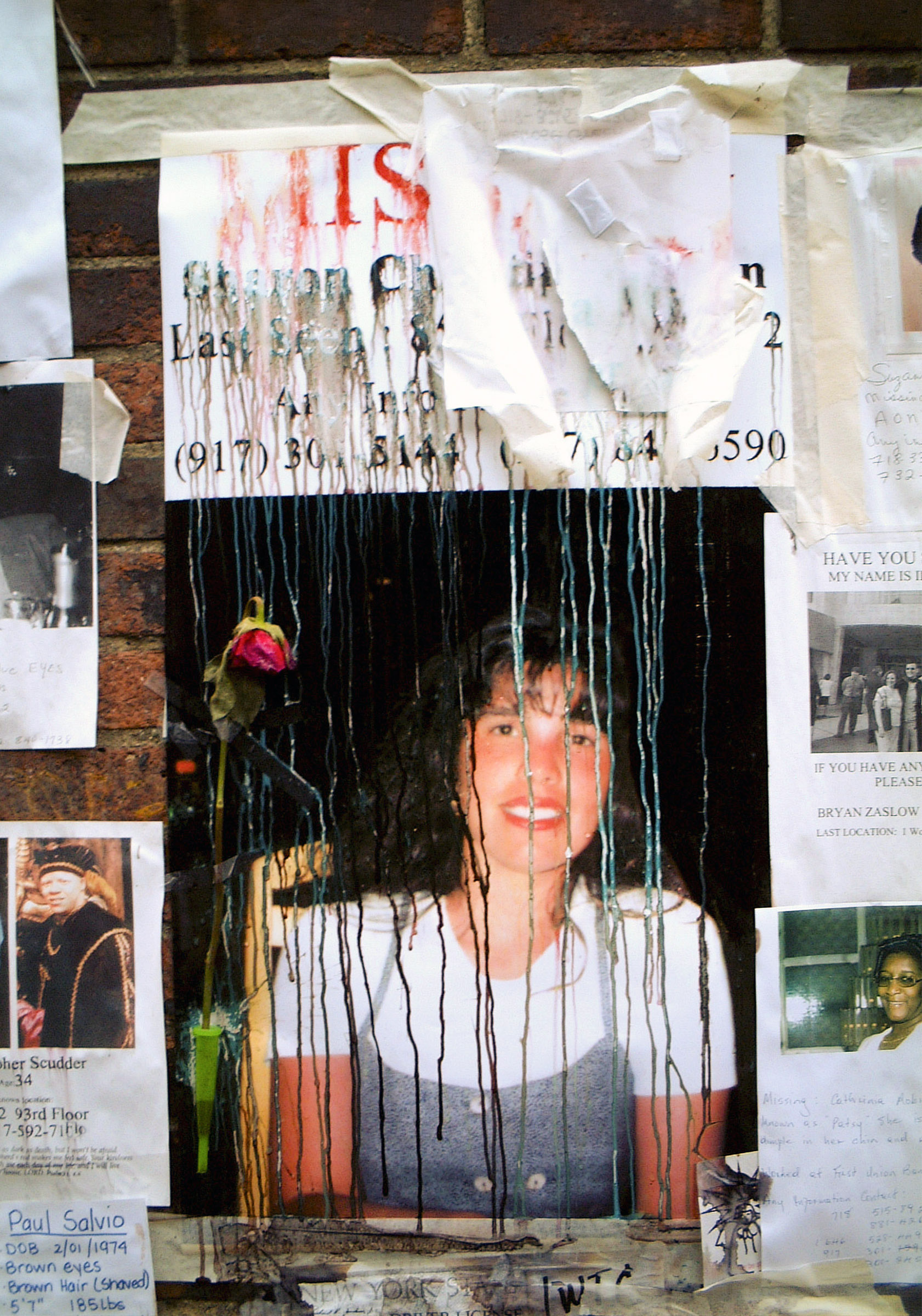
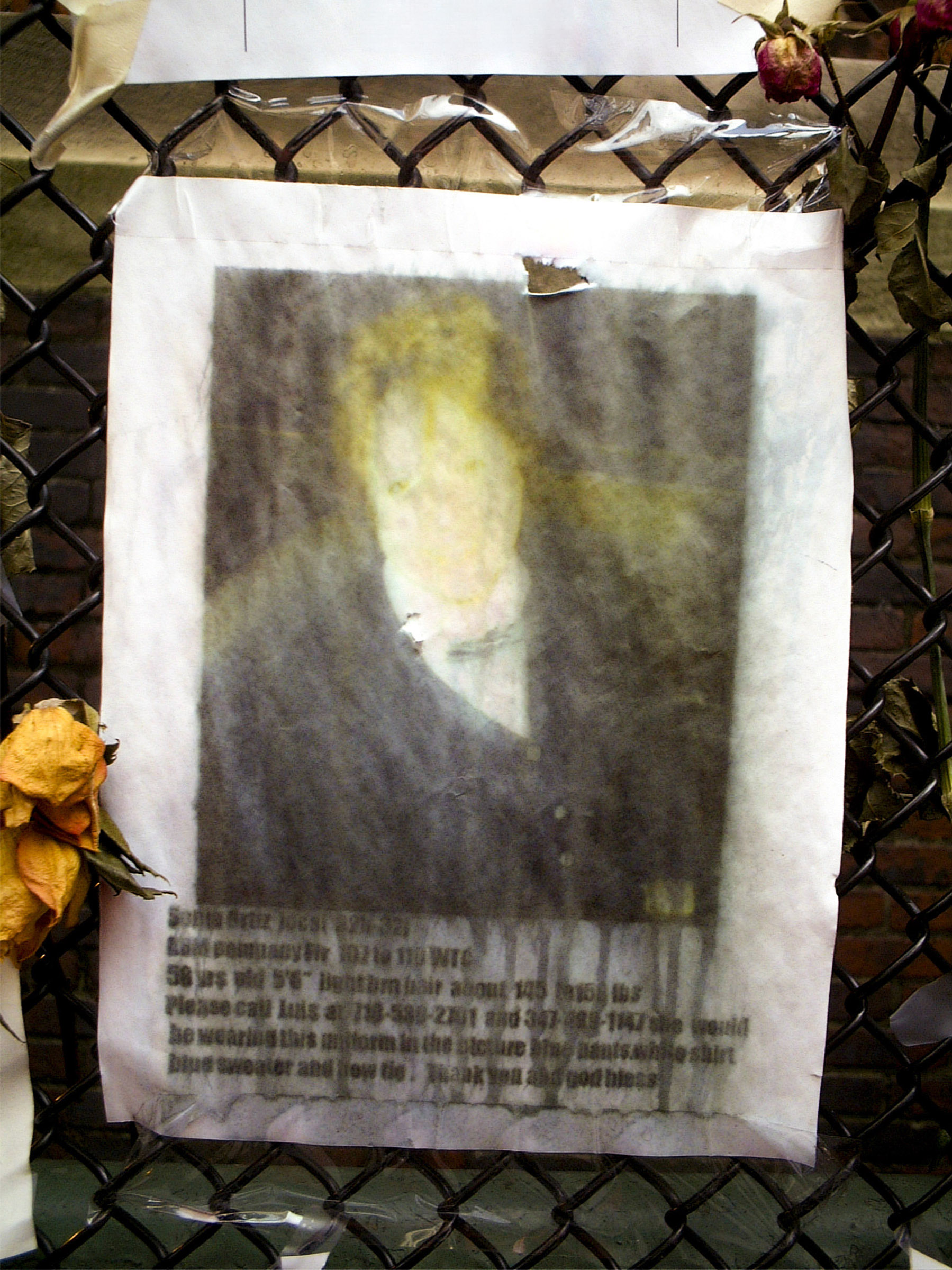
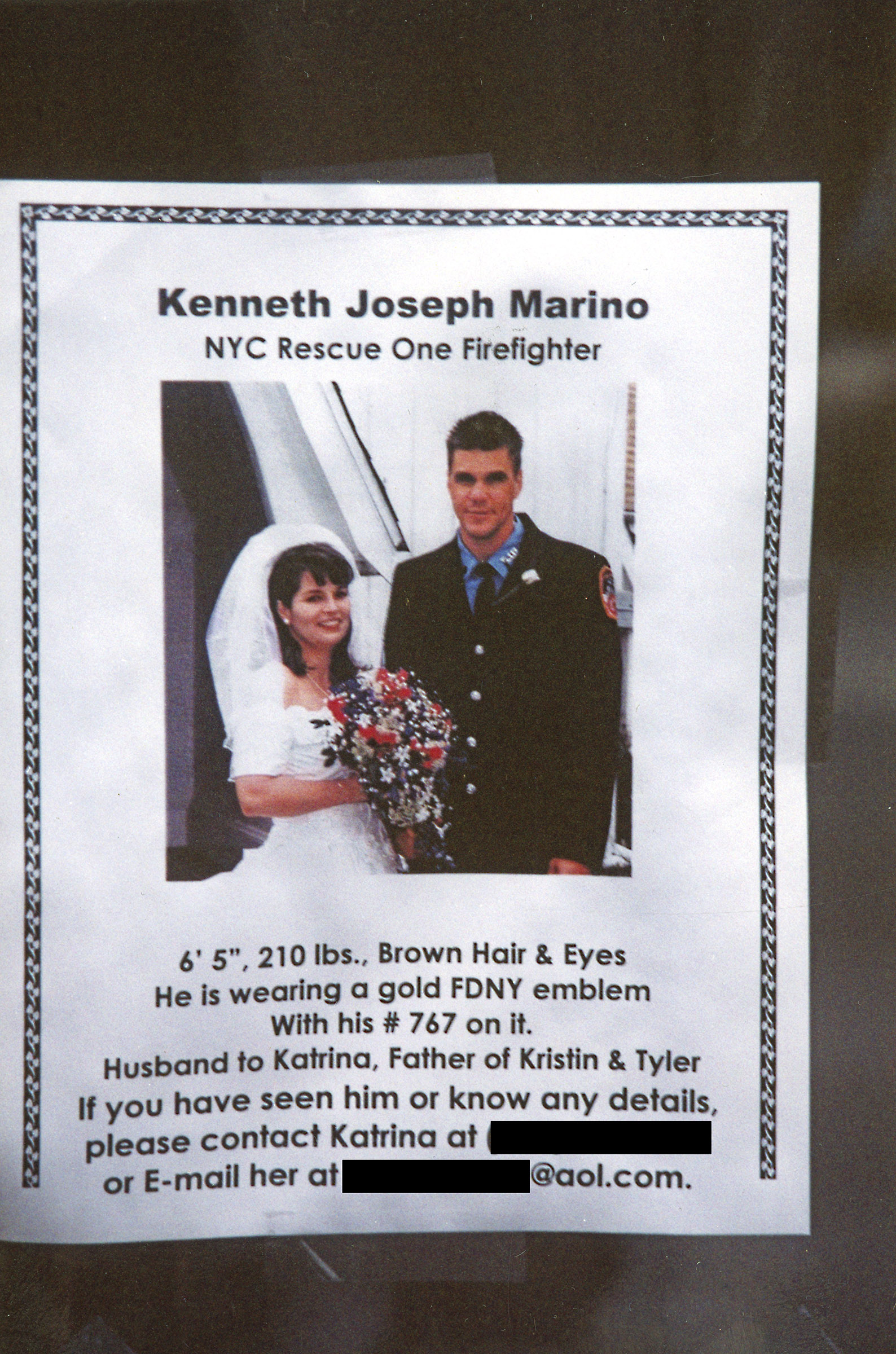
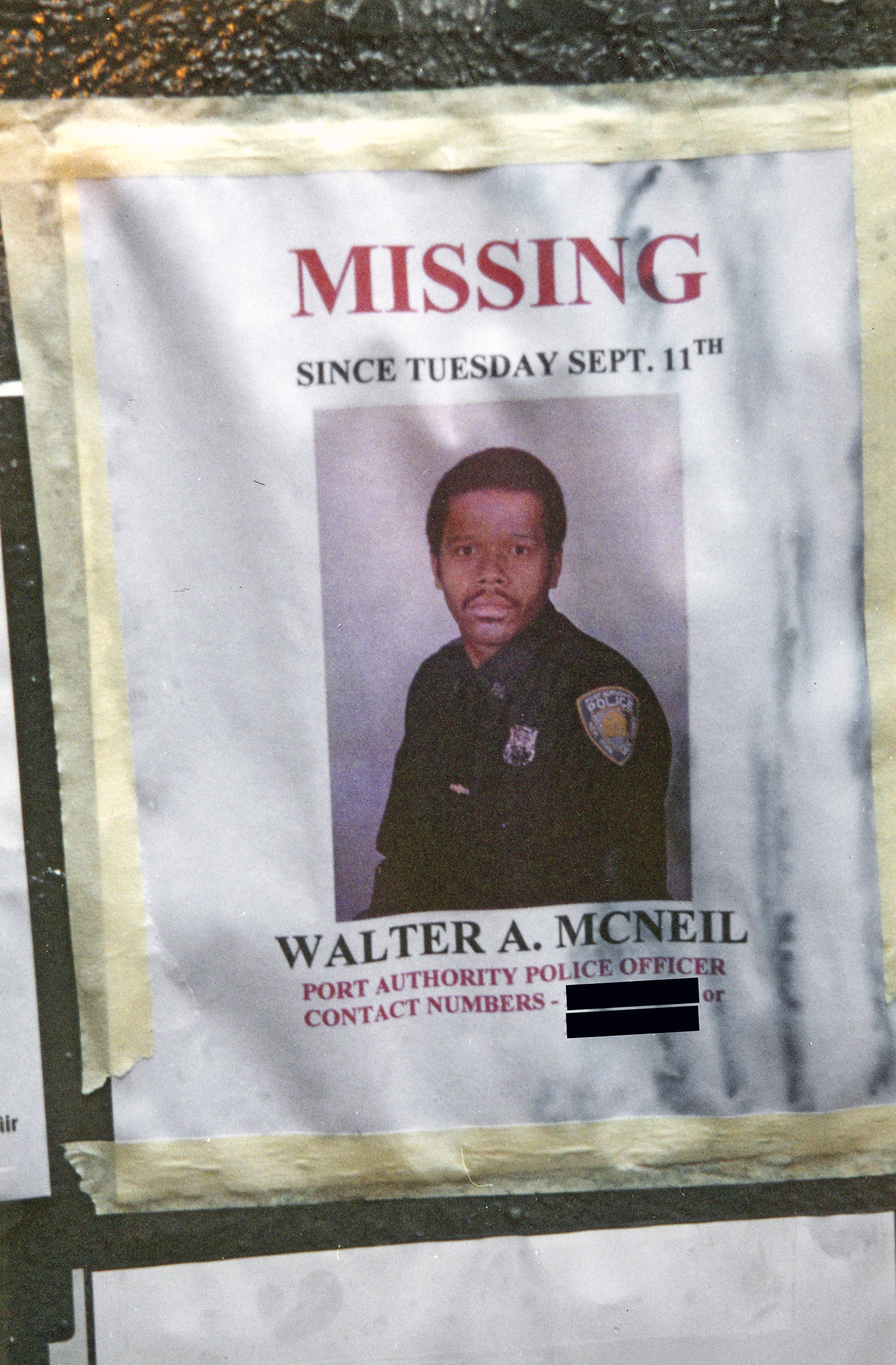
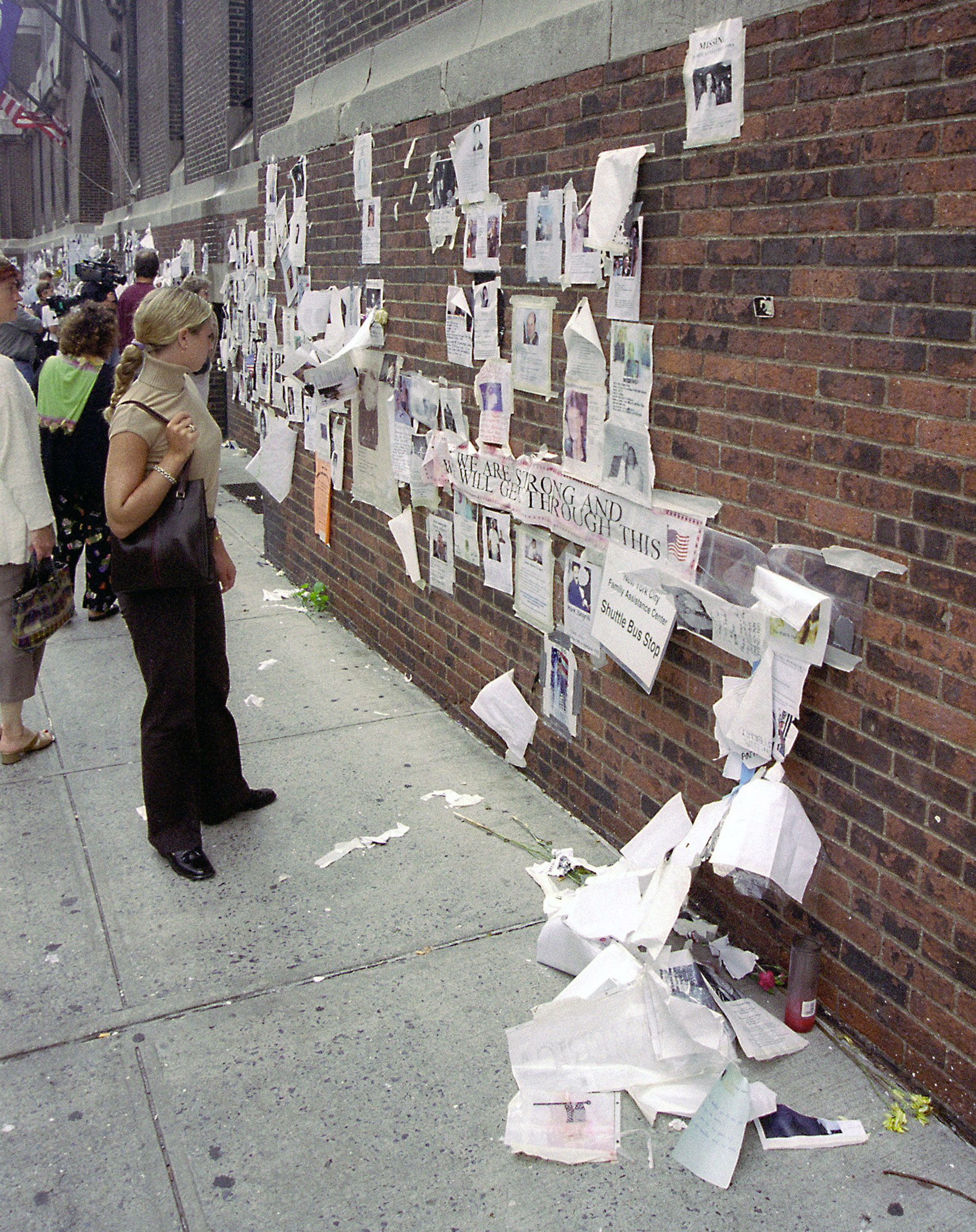
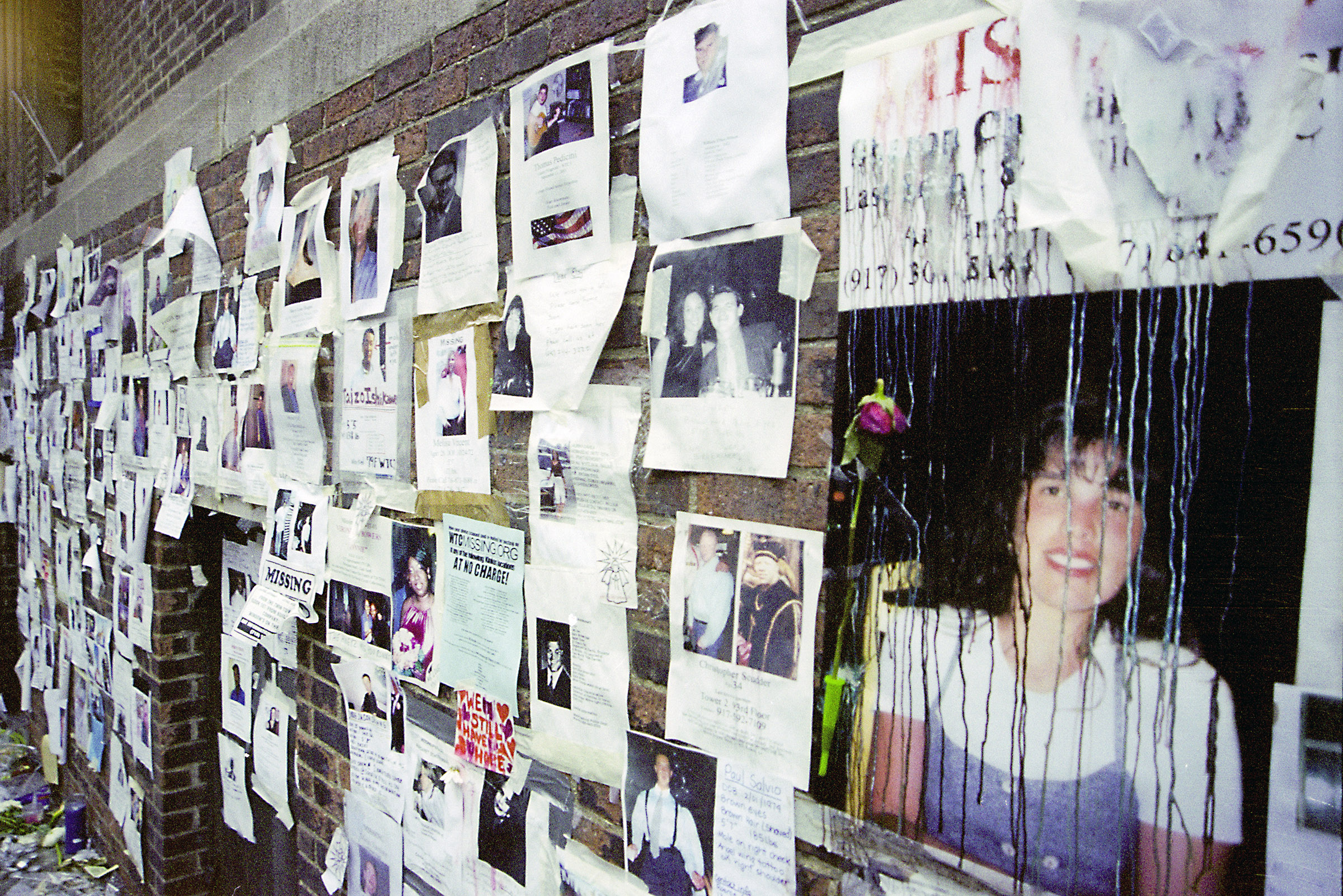
Created in desperation with photocopiers, handwritten notes, and family photographs, and hung on fences, subway entrances, and storefronts, the missing-persons posters that covered New York in the wake of the September 11 attacks transformed the city into a vast landscape of remembrance where the lost were made ever-present. For the first several days after the attacks, the posters represented hope that a loved one might be found. As rescue efforts shifted to recovery, the posters transitioned into expressions of grief that memorialized the lost, reinscribing each person's presence in the world and foregrounding their humanity. They were among the first collective, citywide sites of public mourning — at the time, nothing like it had really happened before. Buehler photographed more than 500 of them.
"These photos stayed in a box on a top shelf for 25 years because I just couldn't bear to look at them — to go back to that moment," Buehler said.
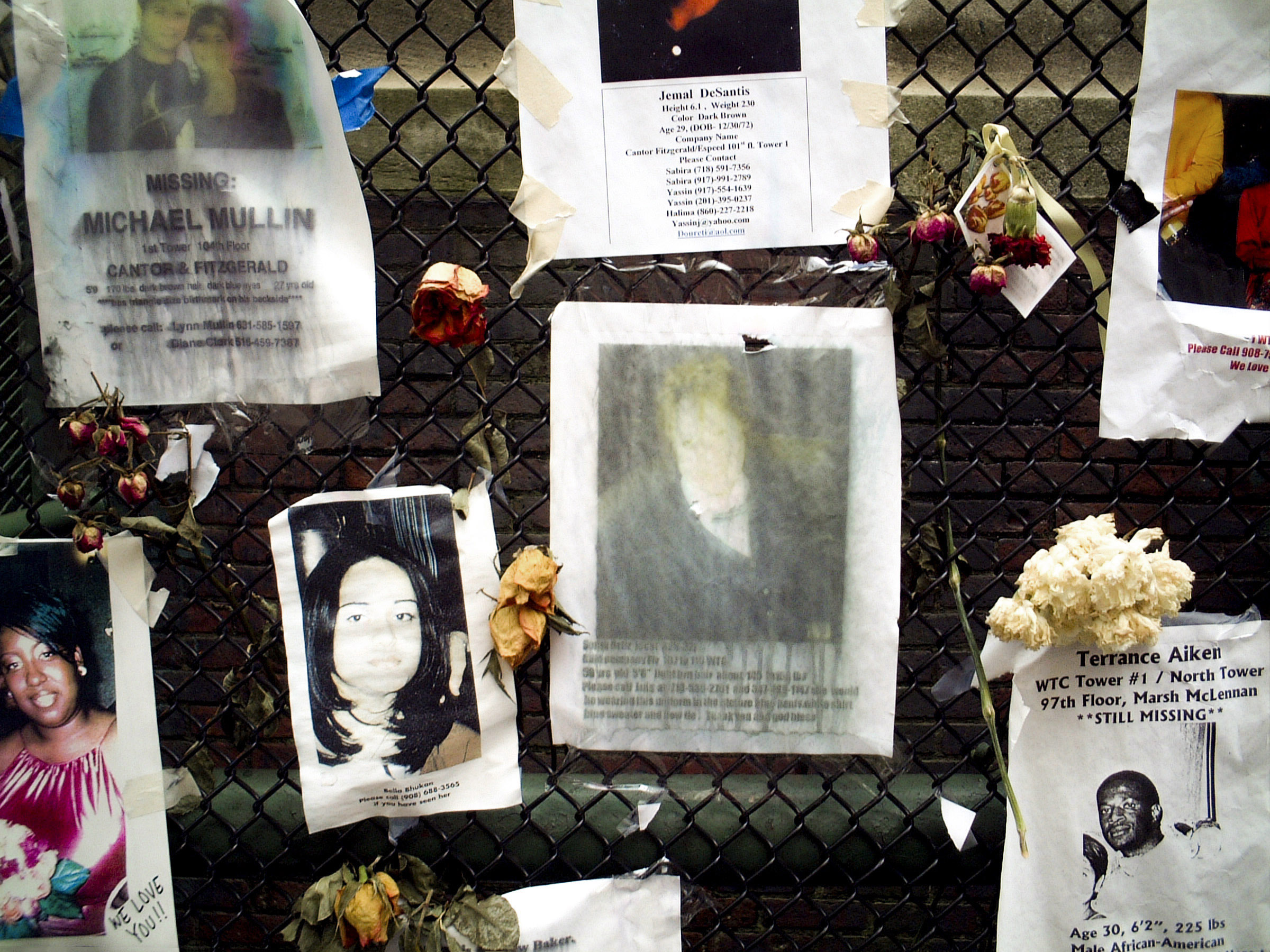
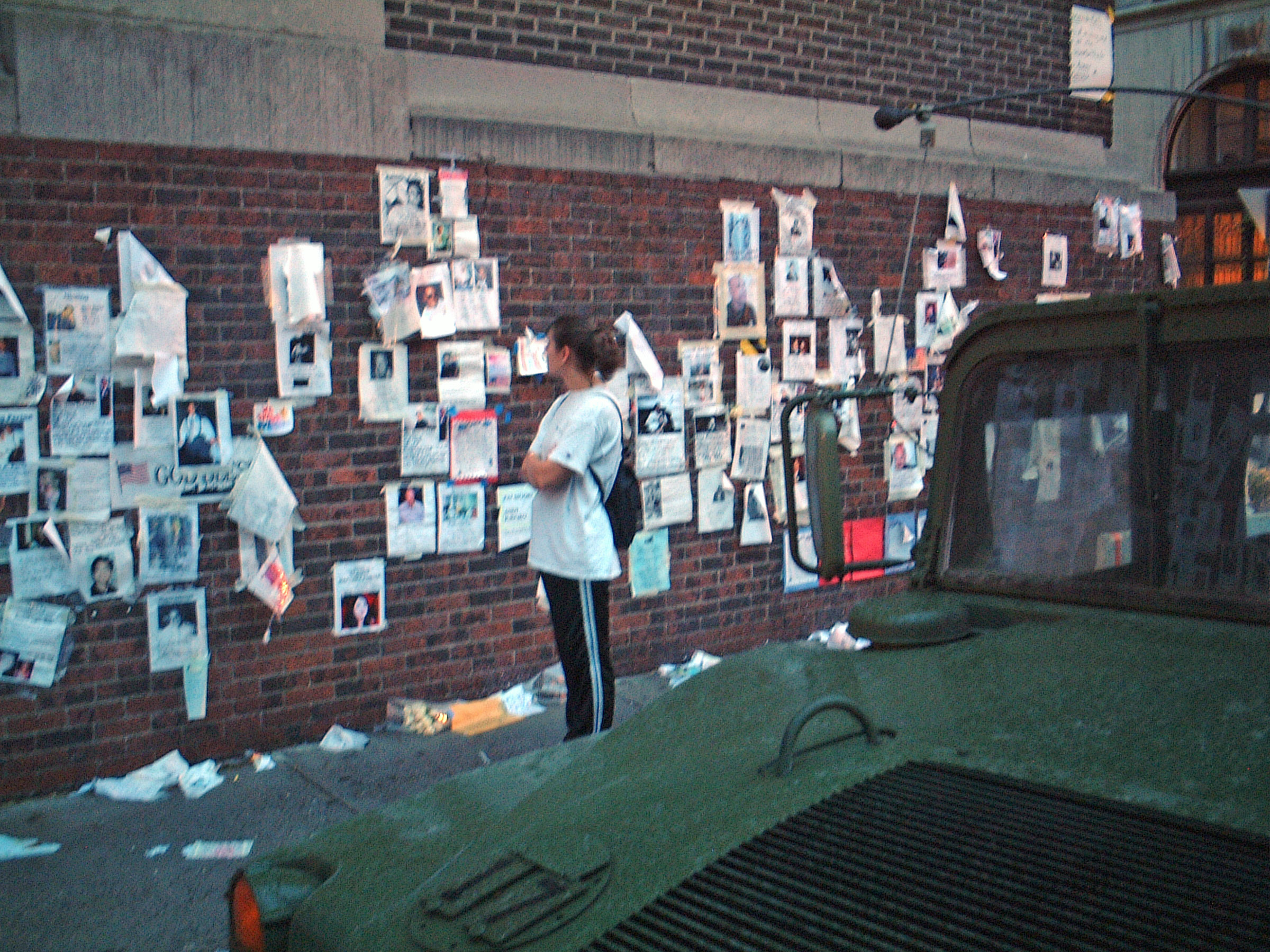
"A father with his children, under the words: 'Help us find our daddy.' Photos in graduation gowns, tuxedos, wedding gowns — however their loved ones wanted them remembered, or just whatever photo was handy. Handwritten details like tattoos, scars, the clothes they wore that morning. Height, weight, date of birth, company, which tower, which floor. Taped, tied, laminated. Color, black and white. Some names and faces blurred after standing in the rain. From lawyers and stockbrokers to restaurant and building support staff to firefighters and police officers. Some with calls for prayers. Many titled 'Missing,' others 'In Memory Of.' Some handwritten, others typed and laid out professionally. Some pleading: 'Have you seen my daddy?' A red, white, and blue background. Hugging a child, a pet, a spouse. The pain of their relatives must have been unbearable."
Most commemorations of September 11th concentrate on Lower Manhattan, though the attacks were felt, and their losses mourned, across all five boroughs and the country. Brooklyn was no exception: nearly 10% of the 2,753 WTC victims called the borough home, and 85 of the 343 firefighters killed that day were stationed at Brooklyn firehouses. Daniel Suhr, a firefighter with FDNY Engine Company 216, became the first New York City firefighter killed responding to the attacks. Engine 216's firehouse stands on Union Avenue, a three-block walk from Most Holy Trinity–St. Mary's own doors on Montrose Avenue.
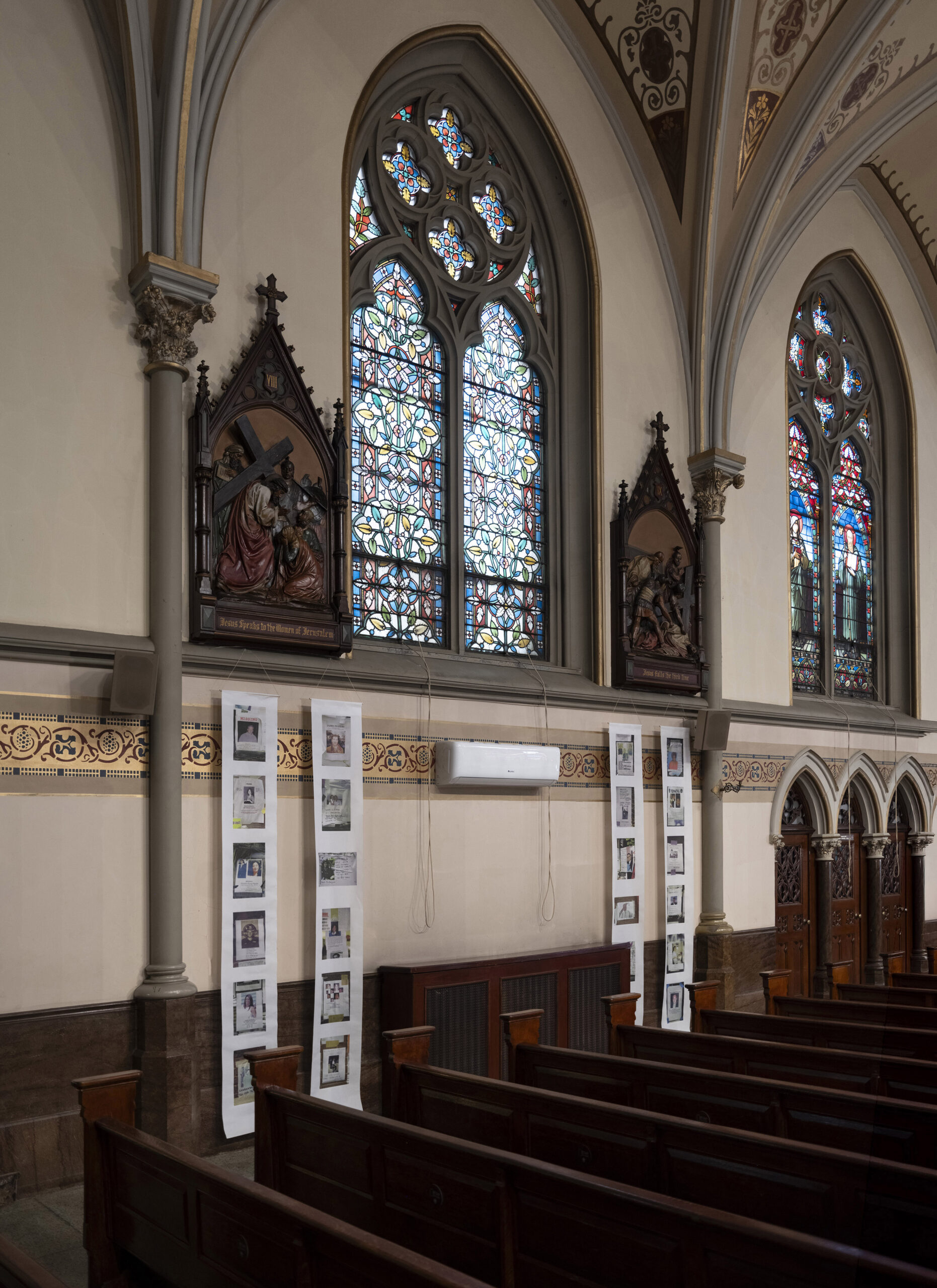
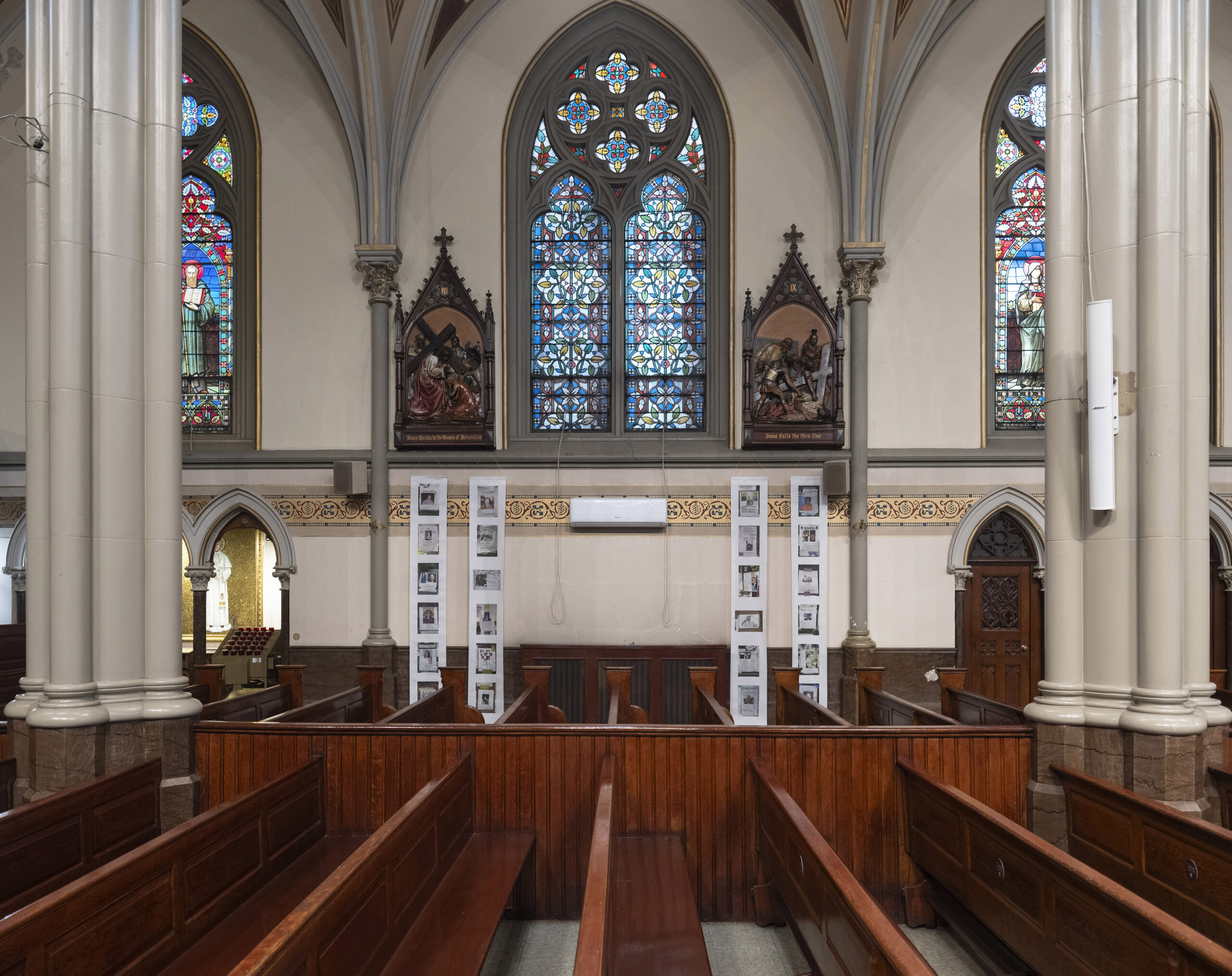
While the exhibition is presented in an active Catholic parish, curators and organizers emphasize that it is intended for all visitors — Catholic or not, religious or not, neighborhood residents and travelers from across the city alike. The church, curators note, felt like the right place to memorialize the victims of September 11th not because the exhibition asks anything of its visitors' faith, but because few spaces in New York are built, as this one is, for slow walking, silence, and standing quietly before a face.
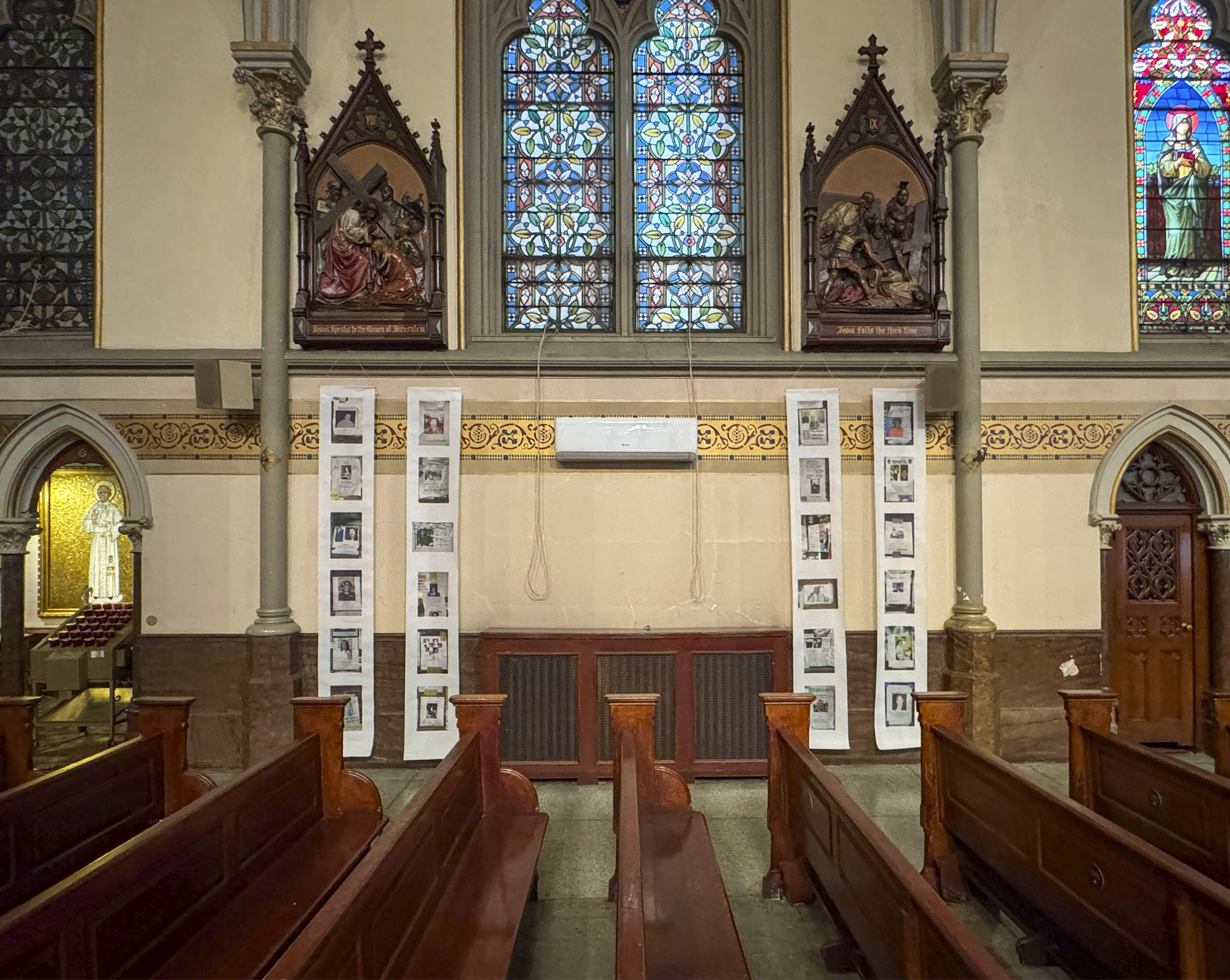
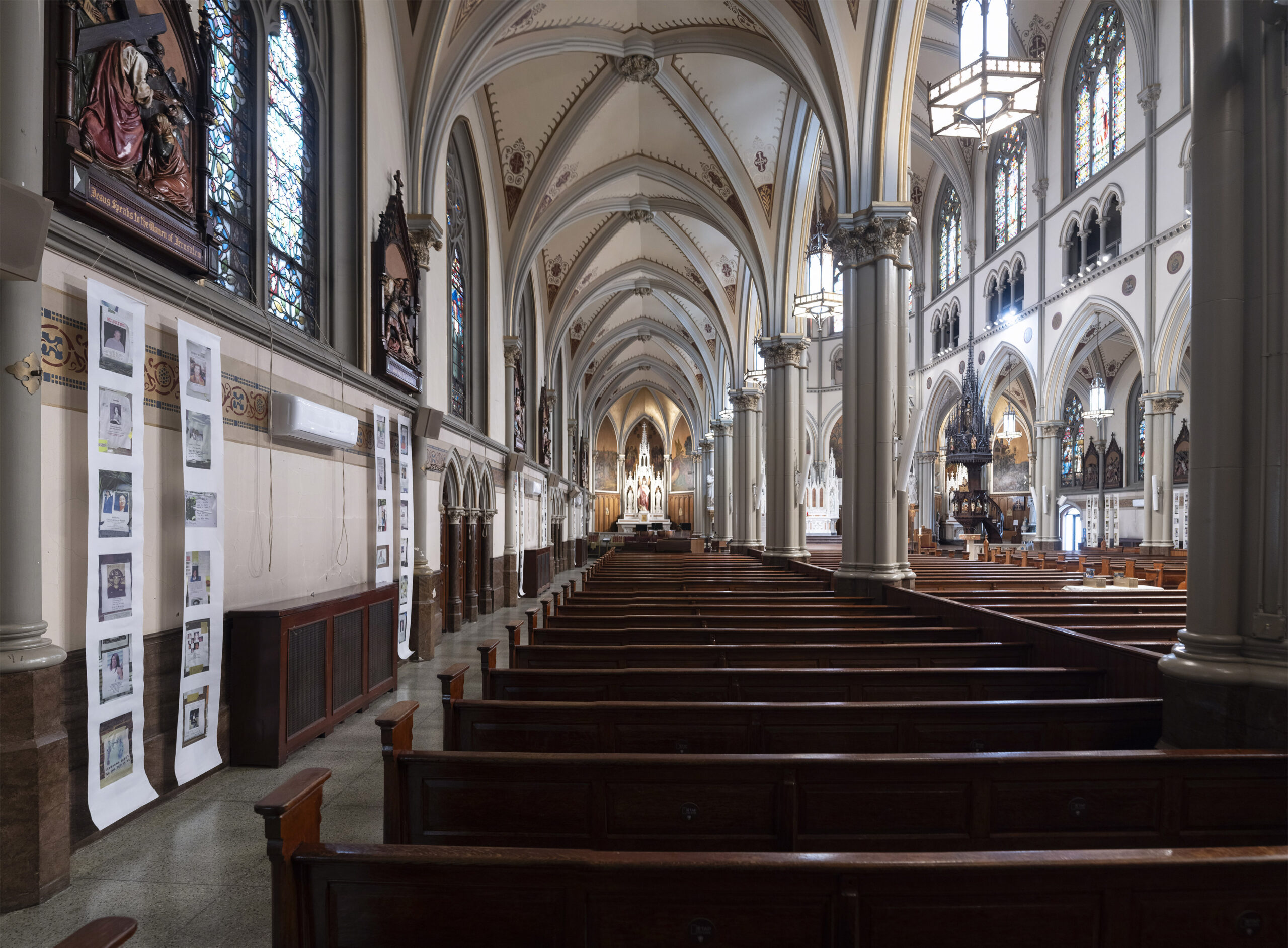
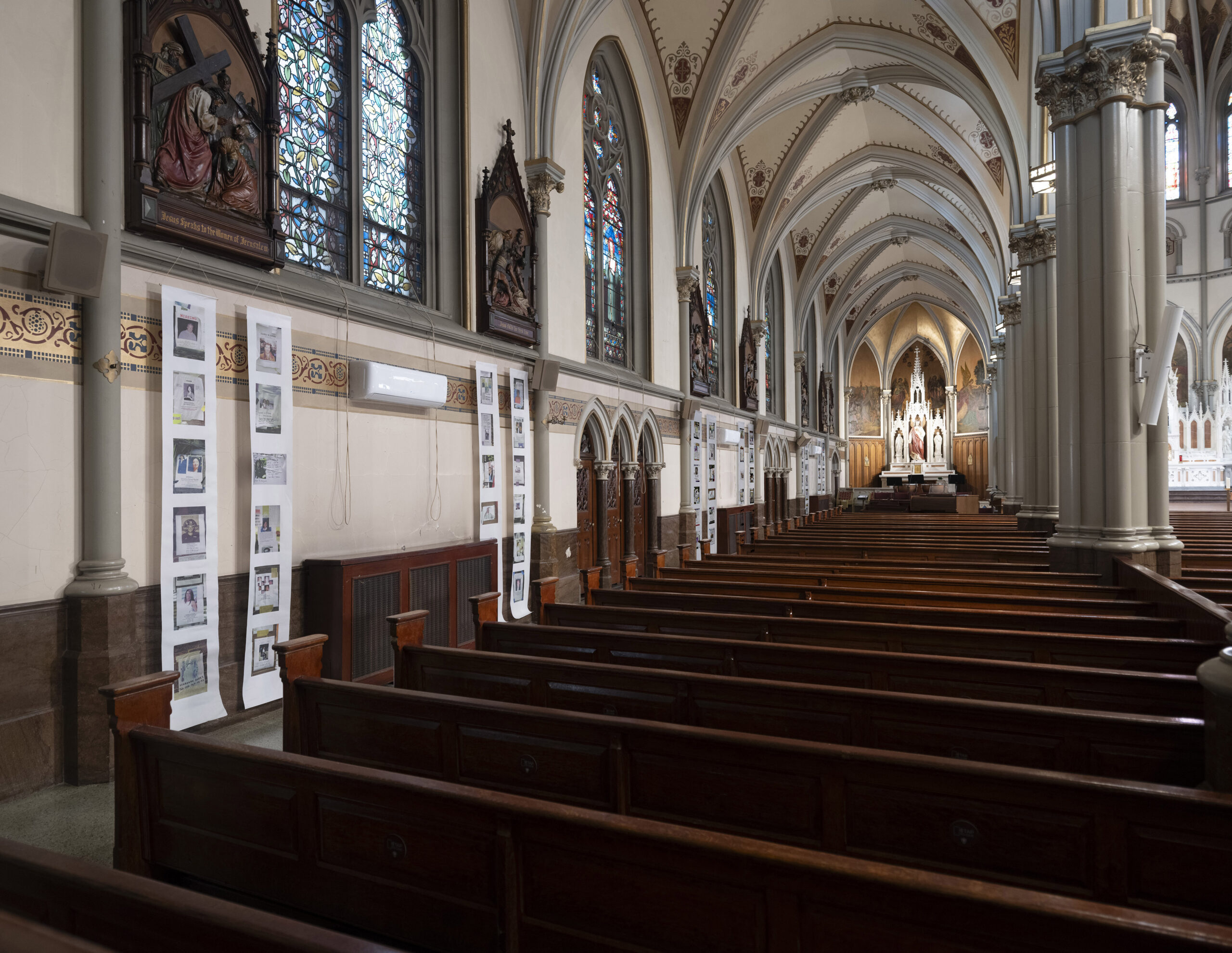
The installation places photographs of 144 victims across twenty-four translucent vellum panels, in vertical pairs reminiscent of the Twin Towers. The vellum's translucency echoes the uncertainty of those early days, when it was unknown whether the missing were alive or dead.
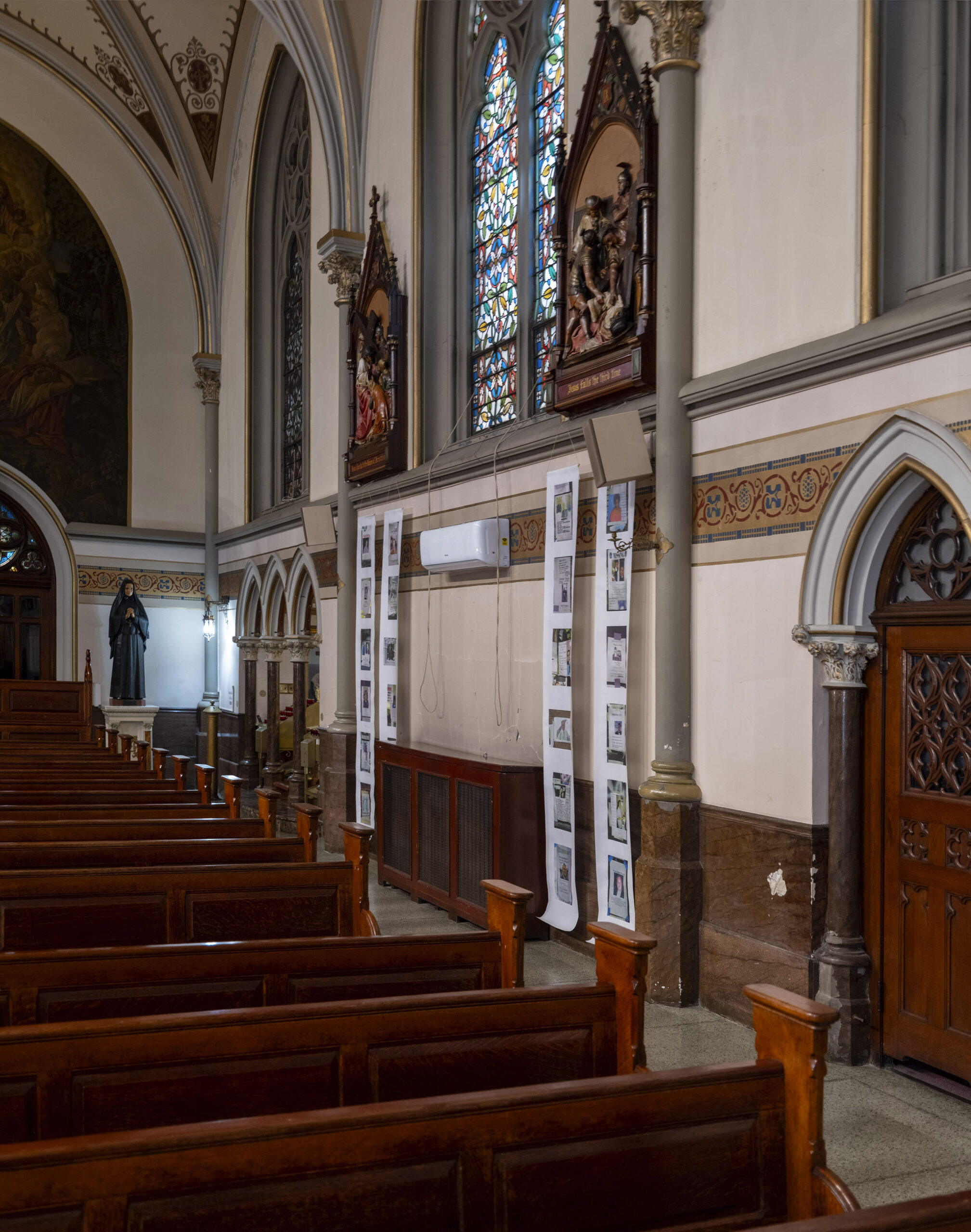
“Our title, Countenance, refers to two understandings of the word: one referring to the human face, the other to presence or bearing. While we’re framing the images of the September 11victims within the long history of devotional practices, this installation reminds us that empathy and compassion are ingrained in the fact of being human,” observes co-curator Sarah Celentano, a medievalist and art historian.
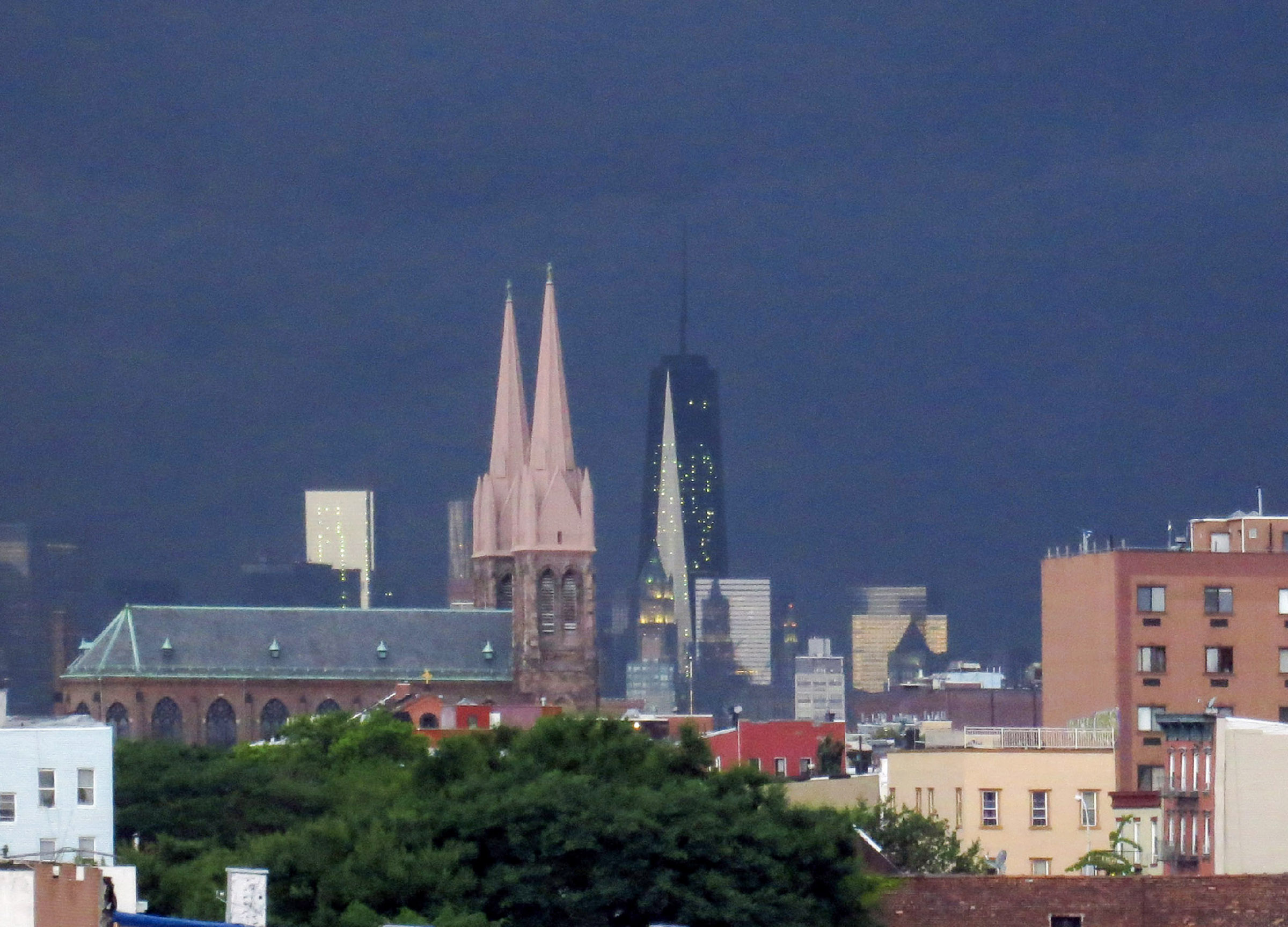
Buehler can see Most Holy Trinity–St. Mary's twin steeples from his Brooklyn apartment window, framed against One World Trade Center to the west — the church's pointed spires echoing the tower's own faceted, angular form. That view, he said, is what first led him to approach Friar Rick Riccioli about installing the exhibition here.
Friar Rick Riccioli, pastor of Most Holy Trinity–St. Mary's and a native of Montreal, said, “For Franciscans, one of our deepest values is
kinship—the recognition that every person is our brother or sister. Bringing these faces into this church is more than an art exhibition. It is an act of kinship, an act of remembrance, and, for us, an act of prayer. Twenty-five years later, we stand with those who were lost, with those wholoved them, and with a city that still carries their memory.
”Riccioli's own religious order carries its own connection to that day: Father Mychal Judge, the FDNY chaplain who became the first certified fatality of the September 11 attacks, was, like Riccioli, a Franciscan friar.
Co-curator Olena Speranska, who fled Ukraine in 2022 as Russian forces occupied her hometown of Irpin, in the Kyiv region, said, "I come to these posters not only through that personal memory, but through my work curating Ukrainian wartime posters — art that carries the same grief, defiance, and hope as the ones on these walls. This exhibition looks back at September 11th, but it also asks something of us now — to remember those who were lost, and those who searched for them, and how vulnerable our world becomes when the wish to destroy others for their identity, culture, or beliefs is met with indifference.”
About Phil Buehler: Buehler has photographed the World Trade Center since 1973, when he was sixteen, and continued for nearly three decades before their destruction. On September 11, 2001, he watched the towers collapse from his office window and ventured with his camera to within a few blocks of "ground zero." That evening, he began one of the earliest real-time online accounts of the attacks and their aftermath — before the word "blog" existed. He alsoproduced 100 signed prints of "Dream City," his photograph of the towers in 1974 from Ellis Island, shrouded in early morning mist, donating all proceeds to the United Way's September 11 Fund. He has since built a body of work centered on public memorial, including Empty Beds, honoring Ukrainian children abducted since Russia's 2022 invasion, and Wall of Tears, memorializing children killed in Gaza since October 2023, and In Lieu of Flowers, a sculptural presentation of the obituaries and lives of those who worked at the demolished Westinghouse Plant in Newark, New Jersey.
About Most Holy Trinity–St. Mary's Church: The church is a historic Williamsburg, Brooklyn parish founded in 1841. Known for its stunning French Gothic Revival architecture, inspired by 13th-century style, it was the setting for a scene in the classic novel A Tree Grows in Brooklyn. The parish today serves a diverse, multilingual Williamsburg community, offering Mass in English, Spanish, and Polish alongside active local outreach programs including food pantries and community gathering series — continuing a long tradition as a spiritual home for the neighborhood's newest arrivals as much as its oldest families. @trinitysaintmarybk
This exhibition was made possible by Most Holy Trinity–St. Mary's Church and Ukrainian Contemporary Art Platform (501(c)(3) non-profit, USA.